Independent audits: how often to audit, and what inspectors typically find
What an independent audit of your Lifts, Escalators and moving walks covers, how often to audit, and what the Report tells you about your Maintenance Provider.
LML Lift Consultants
8
min read
September 24, 2026
The short answer
Have every Lift and Escalator independently audited once a year, on top of your contractor’s monthly servicing, if possible, or as a minimum, at least once during the term of the Maintenance Agreement.
Book an extra audit at five trigger moments: before a Defects Liability Period (DLP) ends, before re-tendering, on a change of contractor, after an incident, and when you buy a building.
Track every defect the audit finds until it is fixed and re-inspected.
For most Owners and Managers, the only Report on the Lift Contractor’s work comes from the Lift Contractor directly. The maintenance happens in Machine Rooms, liftwells and Escalator trusses that nobody else enters.
An independent audit gives you a second report, from industry trained Lift Consultants, who do not undertake the work and remain impartial. This guide covers what an audit inspects, what it usually finds, how often you need one, and how to turn the Report into a schedule of repair works to optimise your equipment.
What is an independent lift audit?
An independent audit, often called a 'Maintenance and Condition Audit', is an inspection of your Lifts and Escalators by an independent Consultant who doesn’t maintain them. It answers three questions:
Is the equipment safe for passengers and Technicians?
Is it maintained to the standard your contract stipulates?
What condition is it in, and how long will it last?
The audit is separate from the Lift Contractor and checks the safety, performance and reliability of the equipment, all of which gives the Owner independent findings and evidence. It is also separate from statutory registration and testing, which are duties in their own right.
LML’s Consultants are all trained Lift Technicians who have worked for the major Lift companies, so in most cases there is no need for contractor attendance. This lowers the cost and keeps the audit independent.
What does a lift audit inspect?
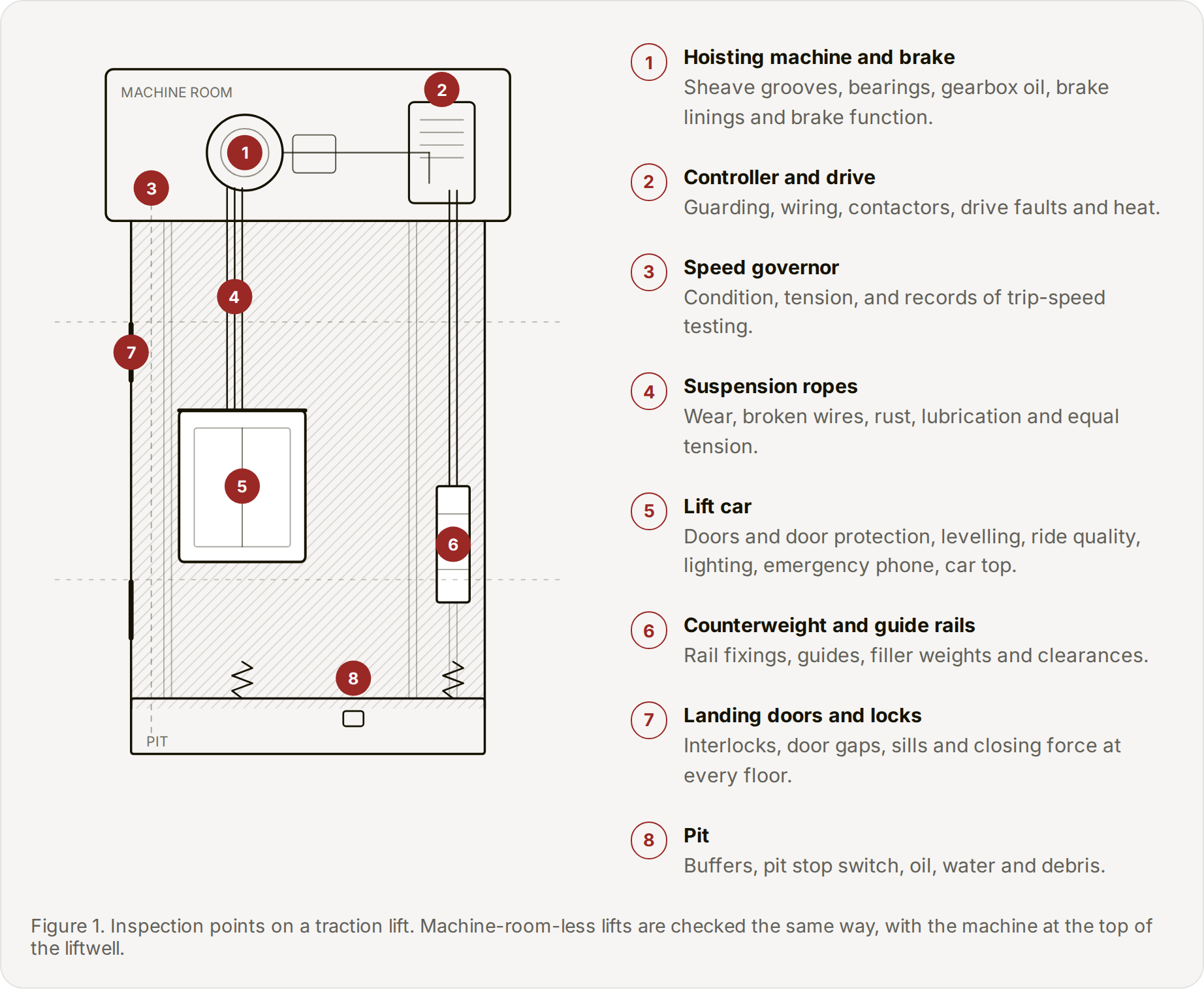
A thorough audit follows the lift from the machine room to the pit.
Figure 1. Inspection points on a traction lift. Machine-room-less lifts are checked the same way, with the machine at the top of the liftwell.
Hoisting machine and brake: sheave grooves, bearings, gearbox oil, brake linings and brake function.
Controller and drive: guarding, wiring, contactors, drive faults and heat.
Speed governor: condition, tension, and records of trip-speed testing.
Suspension ropes: wear, broken wires, rust, lubrication and equal tension.
Lift car: doors and door protection, levelling, ride quality, lighting, emergency phone, car top.
Counterweight and guide rails: rail fixings, guides, filler weights and clearances.
Landing doors and locks: interlocks, door gaps, sills and closing force at every floor.
Pit: buffers, pit stop switch, oil, water and debris.
Records and safety devices
Log book: visits, repairs and callout history
Test records: safety gear, governor, brakes and emergency lighting
Emergency telephone: a real call through to the answering service, checking that it connects and that clarity and volume are acceptable
Escalators and moving walks
Steps, comb-plates, skirt panels and brushes
Handrails and handrail guides, partly lifted to check for wear and sharp edges
Safety switches and the inside of the truss
What do Lift audits typically find?
Audits regularly uncover problems the Owner knows nothing about, even on sites paying premium rates for fully comprehensive maintenance.
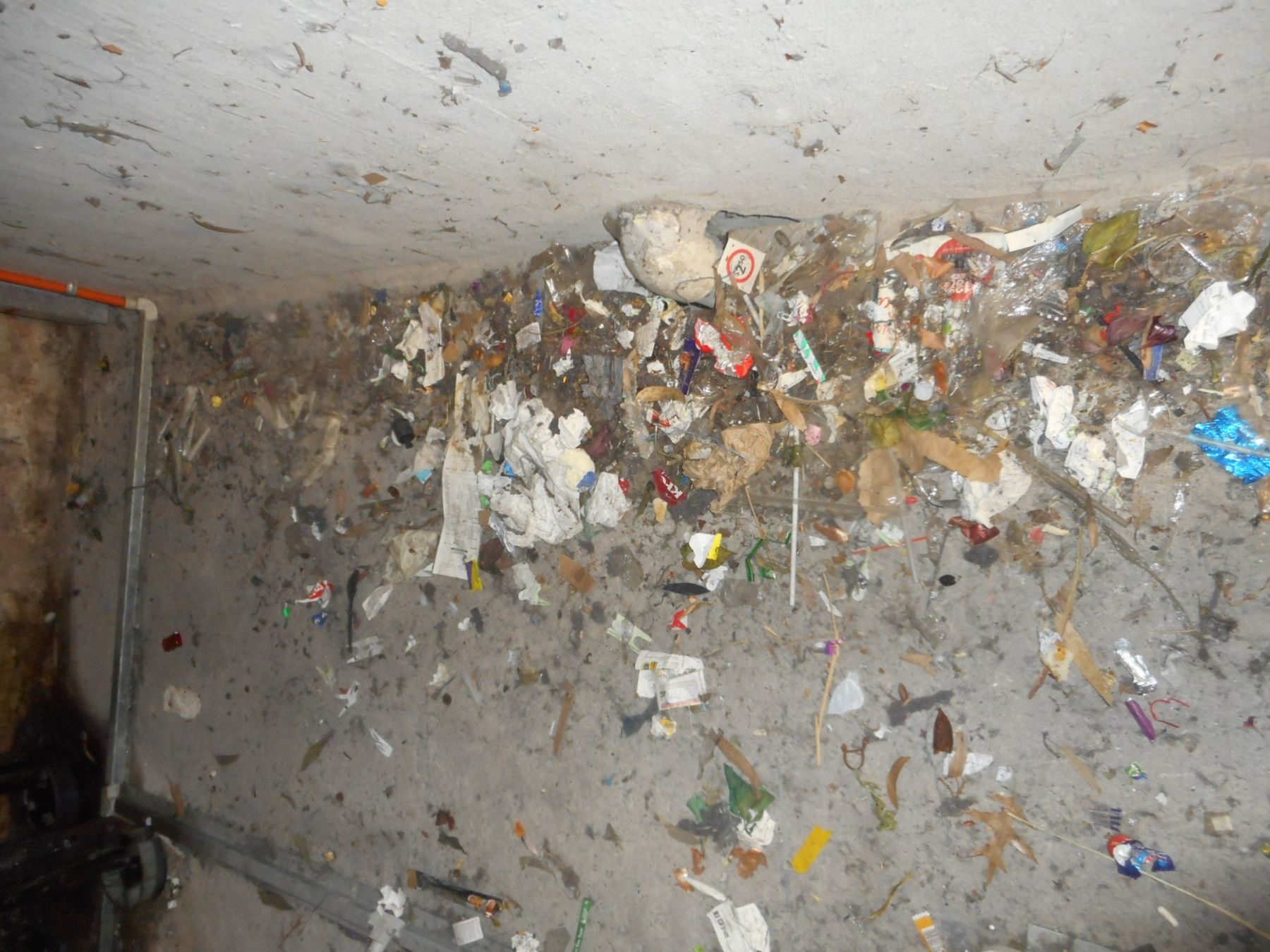
Poor housekeeping: debris, dust and oil in pits, Machine Rooms or Escalator trusses.
Safety devices that have not been tested, or that do not work as designed.
Faults that are reset but never fixed, which show up as repeat callouts for the same fault.
A Lift pit full of rubbish, found during an audit on a site paying for comprehensive maintenance.
When paying for a premium service, you should receive a premium outcome.
Richie Lobert
When maintenance standards slip, the equipment becomes less safe, breaks down more often and wears out early. Owners end up paying twice: once in the contract fee, and again for breakdowns and parts that could have been avoided.
How often should lifts be audited?
The baseline: once a year
For most buildings, an independent audit once a year is the right frequency. It catches problems before they become breakdowns, and keeps the contractor accountable. Once the equipment is consistently in good condition, audits can be spaced out.
Case study: annual audits took callouts to zero
0
callouts recorded in the third year
An owners corporation engaged us to manage three lifts on its behalf. The work included regular meetings with the maintenance provider and an equipment audit each year. The first year identified a large volume of defects and equipment breakdowns. By the second year these had fallen significantly. In the third year no callouts were recorded, and only a couple of minor defects.
Five moments that call for an extra audit
Before the defects liability period ends on new or modernised lifts. This is your last chance to have faults fixed at the installer’s cost.
Before re-tendering maintenance, so bidders price the real condition and existing defects go back to the current contractor.
When you change contractor, to record the condition you hand over.
After an incident or a run of breakdowns.
When you buy a building, as part of due diligence.
How does a lift audit work, step by step?
Scope and access: which lifts and escalators, site contacts, and the best time to inspect.
Site inspection: machine room to pit on each lift. Escalators are often better audited after hours, when the truss can be reached without crowds.
Report: a photographed schedule of defects, each rated for priority and assigned to the contractor or the owner.
Close-out: defects tracked with the contractor until each is fixed and re-inspected.
LML Lens™ turns the schedule of corrective works, the rectification list identified during a maintenance and condition audit, into a live record of findings that shows the open defects still needing attention.
What happens after the audit: closing out defects
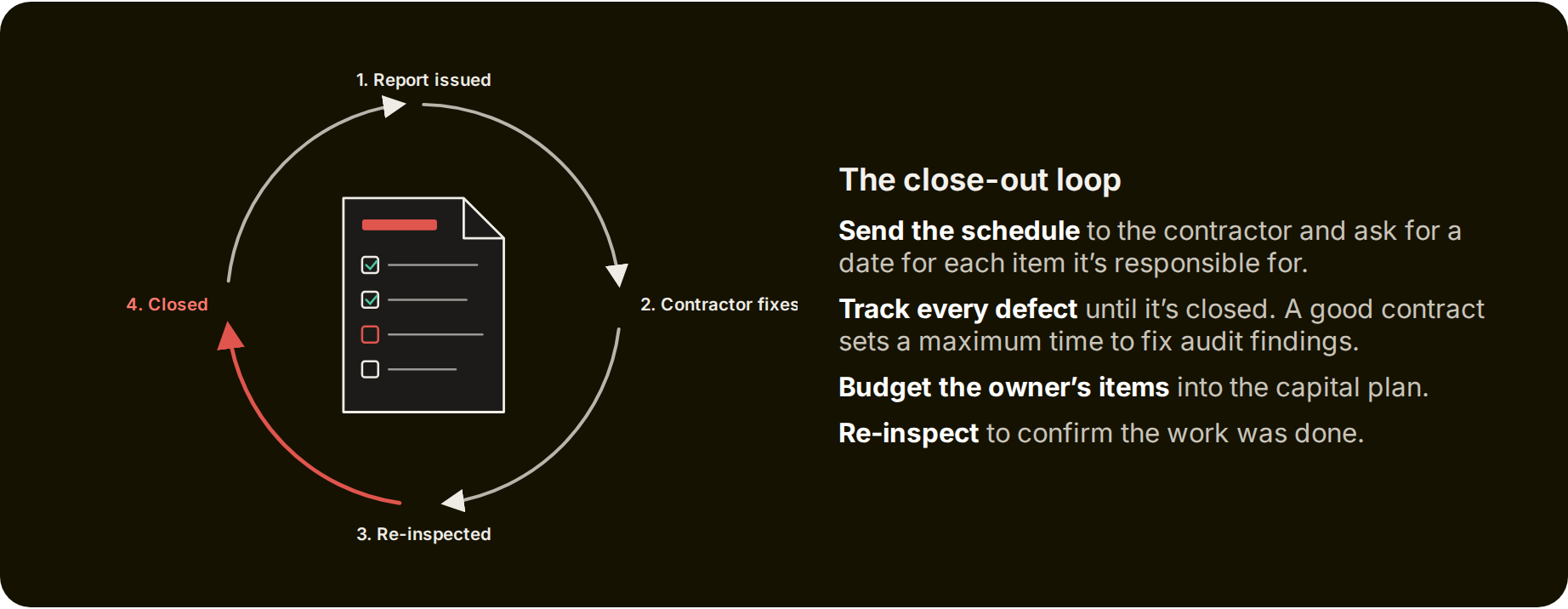
Once the report is issued, every defect goes round the same loop until it is closed.
Send the schedule to the contractor and ask for a date for each item it’s responsible for.
Track every defect until it’s closed. A good contract sets a maximum time to fix audit findings.
Budget the owner’s items into the capital plan.
Re-inspect to confirm the work was done.
What you receive from an LML audit
Every audit ends in a Maintenance and Condition Report written for the people who make decisions. It contains:
An executive summary: one page on the equipment’s condition and the maintenance standard
Detailed findings, with photographs of every defect
Ride quality data recorded with a ride analyser
An analysis of the breakdown report, with trends and areas of concern
A Schedule of Corrective Works, sent to the maintenance contractor to fix at its cost, where the maintenance agreement allows
Why regular audits matter
Without regular independent auditing of contractor performance, servicing can become minimalist and reactive.
Lift audits and compliance
An independent audit doesn’t replace your maintenance provider’s obligations, or the registration and testing lifts need in most states. It sits alongside them, and gives the owner independent evidence that duties are being met.
Audit before the defects liability period ends
On new or modernised lifts, book the audit about two months before expiry, so defects can be listed and fixed in time.
Who pays for a lift audit in a strata building?
For an owners corporation, the audit is a routine maintenance cost, paid from the owners corporation’s funds. It also gives the committee independent evidence when deciding on repairs, modernisation or a new maintenance contract, and data on whether the maintenance provider is meeting its obligations under the agreement. See lift services for owners corporations.
How to choose a lift audit consultant
Audits vary. These are the points that separate an independent vertical transportation consultant from a contractor checking its own work:
Who it reports to: the owner, not the contractor.
Commercial interest: none. LML sells no equipment and takes no commissions.
Brands covered: every major brand.
Defect follow-up: each defect tracked to close-out, and re-inspected.
Hands-on industry training: consultants who have installed, maintained and modernised lifts know where problems hide.
Reports: clear and photographed, so a committee can act on them.
Questions people ask
How often should lifts be audited in Australia?
Your contractor services lifts regularly, usually monthly. An independent audit of that maintenance is recommended once a year, and before any defects liability period ends.
What is a lift maintenance and condition audit?
It is an independent inspection of a lift’s safety, condition and maintenance standard, with a report listing each defect and who is responsible for fixing it.
Does the lift contractor need to attend the audit?
Not usually, if the consultant is a trained lift technician. That keeps costs down and the audit independent.
Is an audit the same as statutory registration or testing?
No. Registration and statutory testing are separate duties. An audit checks that the maintenance you pay for is being done, and that the equipment is safe and in good condition.
Talk to us about a lift audit
LML Lift Consultants carries out independent lift and escalator audits for owners, owners corporations and facilities managers.
{"@context":"https://schema.org","@graph":[{"@type":"Article","@id":"https://www.lmlliftconsultants.com.au/insights/how-often-audit-lifts#article","headline":"Independent audits: how often to audit, and what inspectors typically find","description":"What an independent audit of your Lifts, Escalators and moving walks covers, how often to audit, and what the Report tells you about your Maintenance Provider.","image":"https://cdn.prod.website-files.com/6a7fb1da29c27a176bd73b52/6ab1c725c285e44560268c2c_PYWdutRq.png","datePublished":"2026-09-24T04:15:00.000Z","dateModified":"2026-09-24T04:15:00.000Z","author":{"@id":"https://www.lmlliftconsultants.com.au/#organisation"},"publisher":{"@id":"https://www.lmlliftconsultants.com.au/#organisation"},"mainEntityOfPage":{"@id":"https://www.lmlliftconsultants.com.au/insights/how-often-audit-lifts#webpage"},"inLanguage":"en-AU"},{"@type":"WebPage","@id":"https://www.lmlliftconsultants.com.au/insights/how-often-audit-lifts#webpage","url":"https://www.lmlliftconsultants.com.au/insights/how-often-audit-lifts","name":"How Often Should Lifts Be Audited? A Guide for Owners","isPartOf":{"@id":"https://www.lmlliftconsultants.com.au/#website"},"breadcrumb":{"@id":"https://www.lmlliftconsultants.com.au/insights/how-often-audit-lifts#breadcrumb"},"primaryImageOfPage":"https://cdn.prod.website-files.com/6a7fb1da29c27a176bd73b52/6ab1c725c285e44560268c2c_PYWdutRq.png","inLanguage":"en-AU"},{"@type":"BreadcrumbList","@id":"https://www.lmlliftconsultants.com.au/insights/how-often-audit-lifts#breadcrumb","itemListElement":[{"@type":"ListItem","position":1,"name":"Home","item":"https://www.lmlliftconsultants.com.au/"},{"@type":"ListItem","position":2,"name":"Insights","item":"https://www.lmlliftconsultants.com.au/insights"},{"@type":"ListItem","position":3,"name":"Independent audits: how often to audit, and what inspectors typically find"}]}]}
Get an independent view before you decide
We sell no equipment and take no commissions. Tell us about your building and a consultant will come back to you.